
The Civil War began on April 12, 1861 at Fort Sumter, South Carolina. Initially, seven southern states seceded from the United States to form the Confederate States of America. This number grew to eleven before it was all said and done. In 1862 President Abraham Lincoln raised the call to arms among the Union States, requesting 300,000 volunteers step up and help bring an end to the war.
The men of Southwestern Indiana heard the call and the 80th Indiana Infantry was formed. The regiment consisted of 1,049 men from several southwestern counties in the state. The men were grouped in to 10 companies identified by letters of the alphabet. About 100 men from Edwardsport mustered together at Fort Gibson in Princeton on September 3, 1862 to form Company C. The 80th spent their first year battling for Kentucky before moving on to Tennessee and the Siege of Atlanta. They returned to battle in Tennessee, then were shipped to North Carolina to fight under General William T Sherman in early 1865. They war ended in April 1865, along with the assassination of President Lincoln. The 80th finished out their duties at Salisbury NC where they were mustered out in late June 1865. In the end, the 80th lost 237 men to death, 49 to desertion and 3 were unaccounted for. A more detailed account of their battles can be found in the Civil War Index and the website devoted to the 80th Indiana Volunteer Infantry.
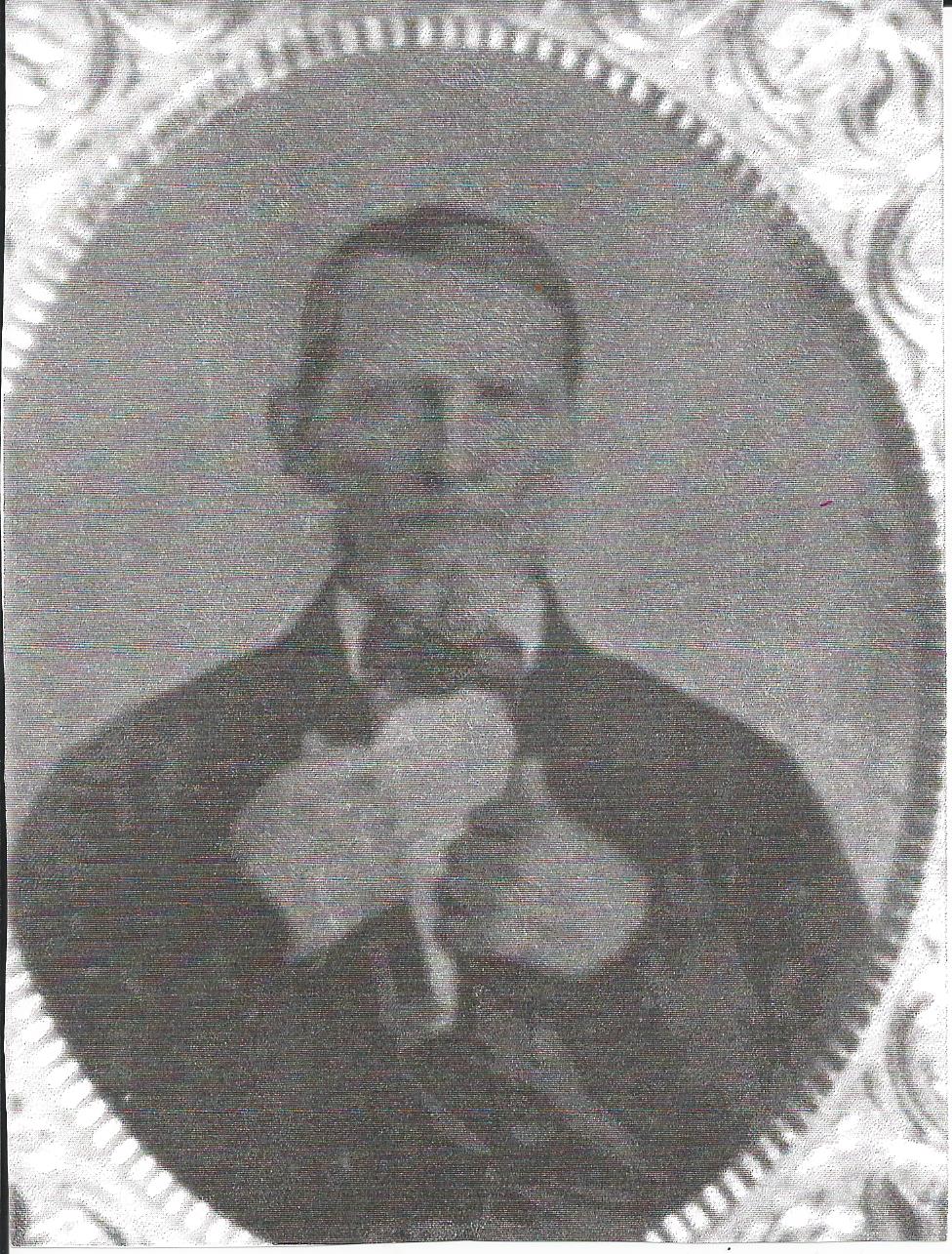
William Lankford
Members of Company C were all from the Edwardsport area. Three men in particular, John S. Cox, George W. Winkler, and Isaac DeMoss, were my 3rd great grandfathers. All three mustered in on September 3, 1862. Unfortunately, not all of them came home. John died at New Haven, KY on January 14, 1863. George and Isaac fared better, mustering out on June 22, 1865. While all three entered service as privates, Isaac finished as a corporal.
Of course, these three were not the only ones in my family’s tree that served in Company C. Isaac’s cousin Samuel Reeve entered as a Sergeant and had attained the rank of First Sergeant by the time he returned home in 1865. George had two of his extended family fighting by his side. William Lankford, George’s brother-in-law, mustered out as a Sergeant after the war while Robert Gilmore, who married one of William’s sisters, was discharged early on April 24, 1863.
 Digging Up My Roots